Diagram
UDM Normalization and Enrichment Pipeline
Process Flow
A five-step process flow showing raw logs being parsed into UDM, indexed, enriched with UDM aliasing and geolocation, and enriched with entity context graph and threat intelligence before feeding the Detection Engine, with a callout noting that the raw log is stored alongside the UDM event.
In the Domain
Threat Detection on Normalized and Enriched Data
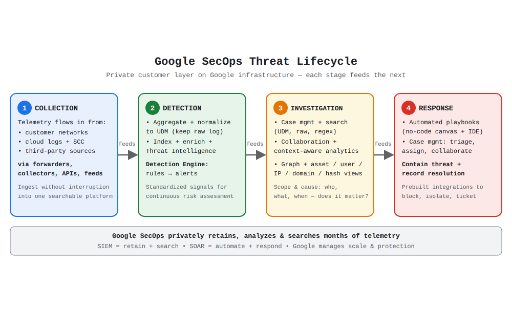
Threat detection in Google SecOps turns different log formats into standardized, enriched signals that rules and intelligence can evaluate. A parser first validates, extracts, and transforms each raw log into UDM, while the original raw log stays stored alongside the UDM event. Google SecOps then indexes the UDM data for fast search, adds entity context such as login names linked to IP addresses, hostnames, and MAC addresses, adds geolocation and WHOIS data, and compares indicators such as domains, IP addresses, and file hashes against Google threat intelligence and Safe Browsing lists. The Detection Engine runs custom and Google-built rules against incoming data to find known and potential threats and generate alerts.
Domain 7 of 7
Define Security Operations (SecOps) in the cloud and describe its business benefits.
Read the Domain summaryPractice this Domain
27 practice questions
Practice this DomainMore from this Domain
Last updated