Seeking the thrill of transformative tech? Explore the art of designing and implementing DevOps solutions on Azure. Master the shift towards CI/CD, testing, and delivery, while preparing for the Designing and Implementing Microsoft DevOps Solutions exam!
Prepare and test your skills

Prepare and test your skills
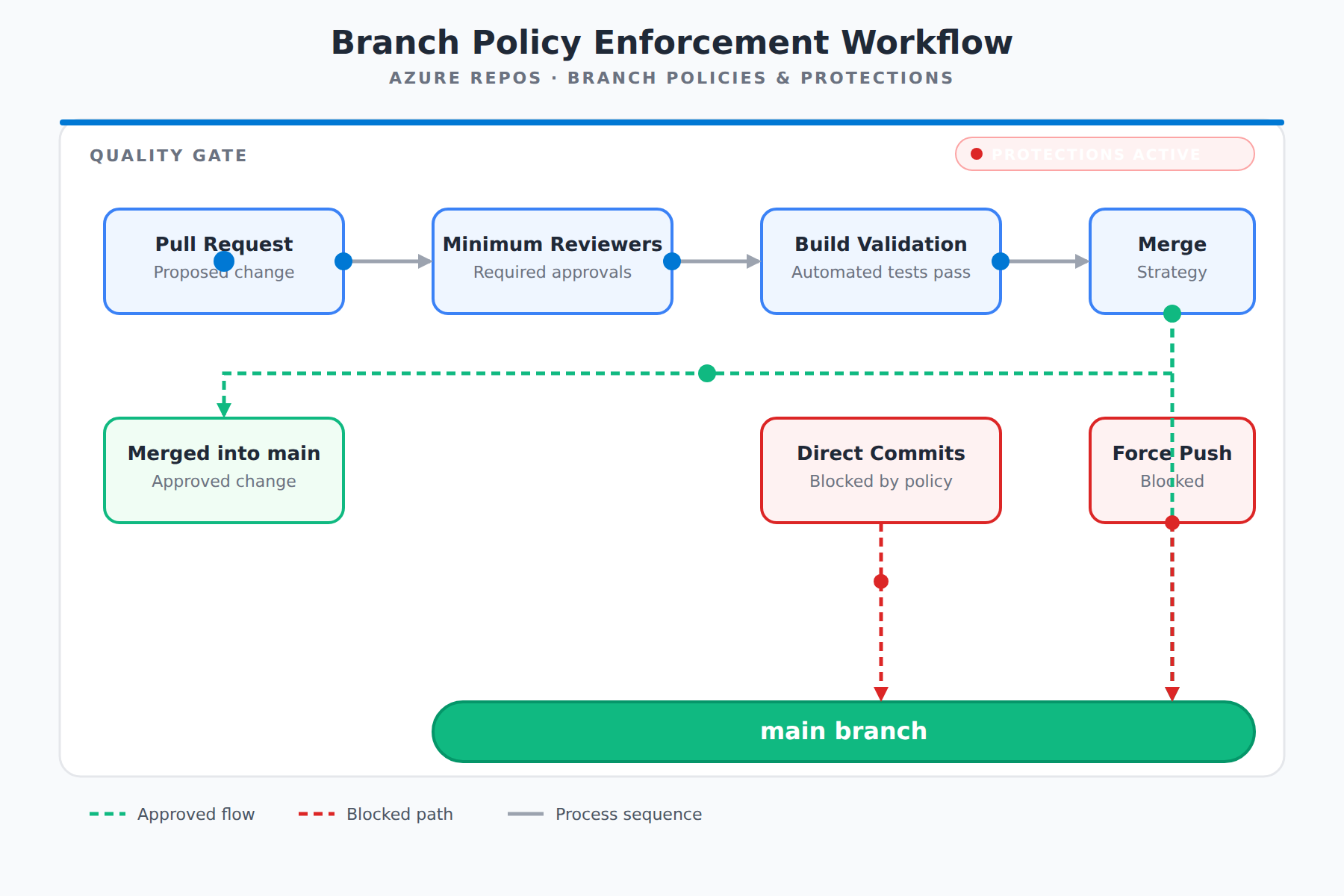
A process flow showing a pull request passing through minimum reviewers, build validation, and merge strategy policies before being merged into the protected main branch, while direct commits and force pushes are blocked.
Branch policies are rules set on important branches to control how code gets merged, acting as quality gates. Branch protections lock a branch down with settings that stop people from bypassing those rules, such as blocking force pushes and direct commits.
The minimum reviewers policy requires a set number of team members to approve a pull request before it can be merged, which spreads knowledge and catches mistakes.
Blocking direct commits ensures that every single change must come through a reviewed pull request, preventing any changes from being made directly to the branch.
The summary mentions requiring a squash merge as a specific merge strategy to keep the branch history clean.
Branch policies are rules you set on important branches, like your main branch, to control how code gets merged. They act as a quality gate, making sure every change meets your team's standards before it becomes part of the official codebase.
You can create several key policies. A minimum reviewers policy requires a set number of team members to approve a pull request before it can be merged, which spreads knowledge and catches mistakes. A successful build validation policy forces the code to pass automated builds and tests in your pipeline, preventing broken code from being added. You can also define specific merge strategies, which control how the branch history is recorded, such as requiring a squash merge to keep history clean.
Beyond policies, you can lock a branch down with protections. These settings stop people from bypassing your rules. Key protections include blocking force pushes, which prevents someone from overwriting the branch's commit history, and blocking direct commits, which ensures every single change must come through a reviewed pull request. This keeps the branch's history reliable and forces all work through your approved process.
 StudyCerts
 StudyCerts