Seeking the thrill of transformative tech? Explore the art of designing and implementing DevOps solutions on Azure. Master the shift towards CI/CD, testing, and delivery, while preparing for the Designing and Implementing Microsoft DevOps Solutions exam!
Prepare and test your skills

Prepare and test your skills
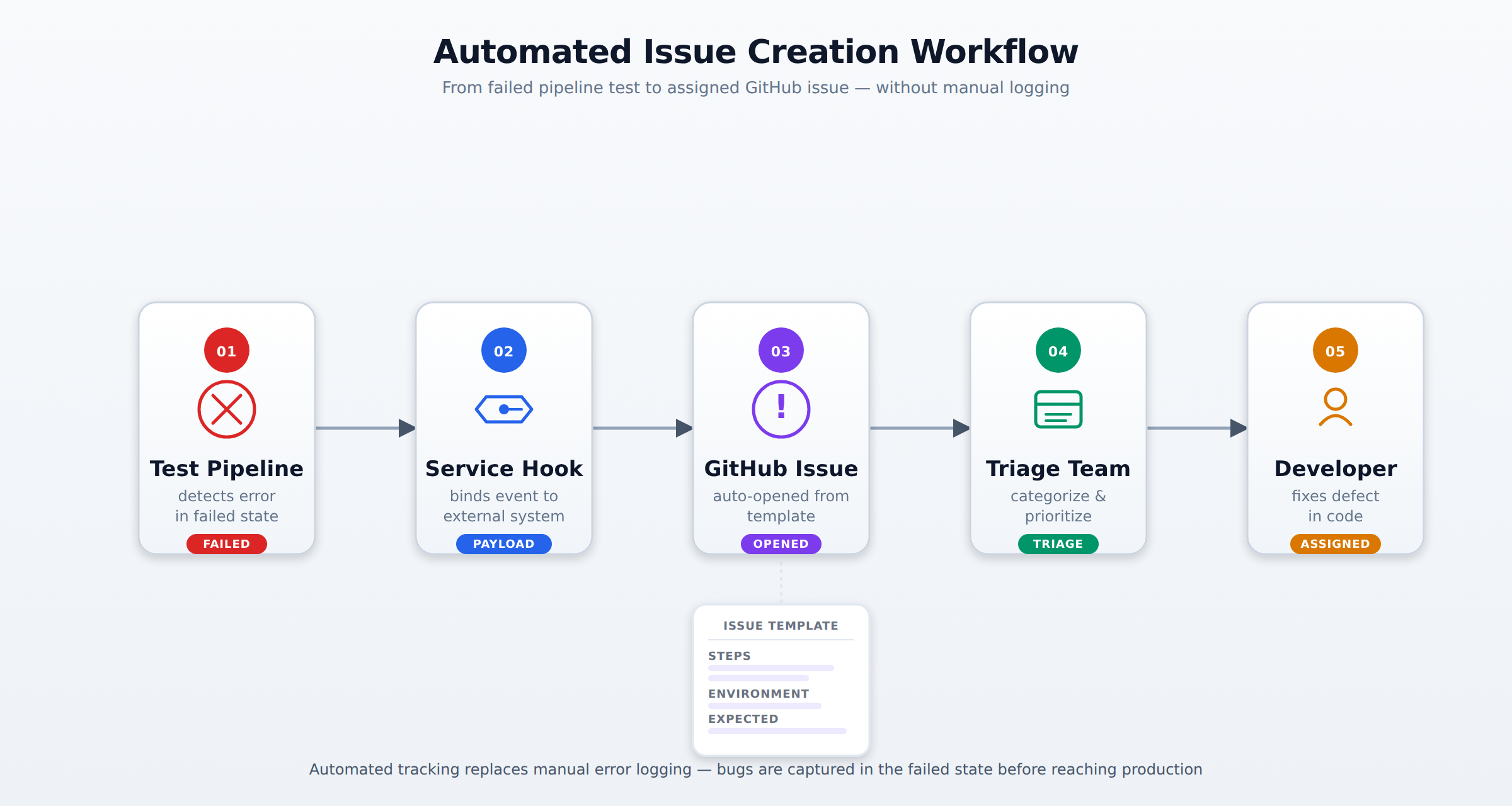
A horizontal process flow showing a failed pipeline test triggering a service hook that opens a structured GitHub issue, which is then triaged and assigned to a developer. Animated packet flow conveys the order and direction of events.
Azure DevOps notification subscriptions route targeted alerts about pull requests, build outcomes, and deployments directly to the team members responsible for those areas. By establishing clear routing rules, teams reduce resolution times because the right person is notified immediately when an event occurs. This targeted flow of data keeps work traceable and ensures that critical pipeline failures are never missed in a flood of irrelevant emails.
Service hooks drive automated actions across different platforms by binding Azure DevOps events to external systems. When a specific event triggers, such as a failed pull request or a completed build, the service hook sends an automated payload to external tools. For example, a service hook can automatically generate a work item in Azure Boards or post a status update to a Slack channel the moment a deployment fails.
GitHub issue templates standardize the way contributors report bugs and request new features by requiring specific details before an issue can be submitted. When a user opens a new issue, the template prompts them for pre-defined details like steps to reproduce, environment configurations, and expected results. This consistent data collection allows triage teams to quickly categorize, prioritize, and assign work without wasting time asking for missing information.
Teams can automate the creation of issues directly from build and deployment failures. When an automated testing pipeline detects an error, it triggers a workflow that automatically opens a new GitHub issue or Azure Boards work item. This early detection mechanism ensures that bugs are captured in the failed state before they can reach production environments, allowing developers to focus on writing code rather than administrative error logging.
Maintaining clear communication during the software delivery lifecycle requires a structured flow of feedback. By customizing notifications and automating how alerts move between systems, teams can identify and address problems without manually tracking every update. The main goal is to connect development actions, like code commits or failed builds, directly to the communication tools and project management boards that developers monitor daily.
To keep stakeholders informed without overwhelming them, configure Azure DevOps notification subscriptions. These subscriptions route targeted alerts about pull requests, build outcomes, and deployments directly to the team members responsible for those areas. By establishing clear routing rules, teams reduce resolution times because the right person is notified immediately when an event occurs. This targeted flow of data keeps work traceable and ensures that critical pipeline failures are never missed in a flood of irrelevant emails.
While notifications keep people informed, service hooks drive automated actions across different platforms by binding Azure DevOps events to external systems. When a specific event triggers—such as a failed pull request or a completed build—the service hook sends an automated payload to external tools. For example, a service hook can automatically generate a work item in Azure Boards or post a status update to a Slack channel the moment a deployment fails. This integration removes manual steps from the triage process and ensures that system states are synchronized across all development environments.
Feedback from users and automated systems must be structured to be useful, which is where GitHub issue templates become essential. These templates standardize the way contributors report bugs and request new features by requiring specific details before an issue can be submitted. When a user opens a new issue, the template prompts them for pre-defined details like steps to reproduce, environment configurations, and expected results. This consistent data collection allows triage teams to quickly categorize, prioritize, and assign work without wasting time asking for missing information.
To maximize responsiveness, teams can automate the creation of issues directly from build and deployment failures. When an automated testing pipeline detects an error, it triggers a workflow that automatically opens a new GitHub issue or Azure Boards work item. This early detection mechanism ensures that bugs are captured in the failed state before they can reach production environments. By replacing manual error logging with automated tracking, developers can focus their energy on writing code and fixing defects rather than administrative tasks.
 StudyCerts
 StudyCerts